
Dyslexia is a lifelong, neurobiological learning difference that mainly affects how the brain processes written language. It is not a reflection of intelligence, vision or effort. It is a difference in how the brain connects the sounds of speech to the letters on the page.
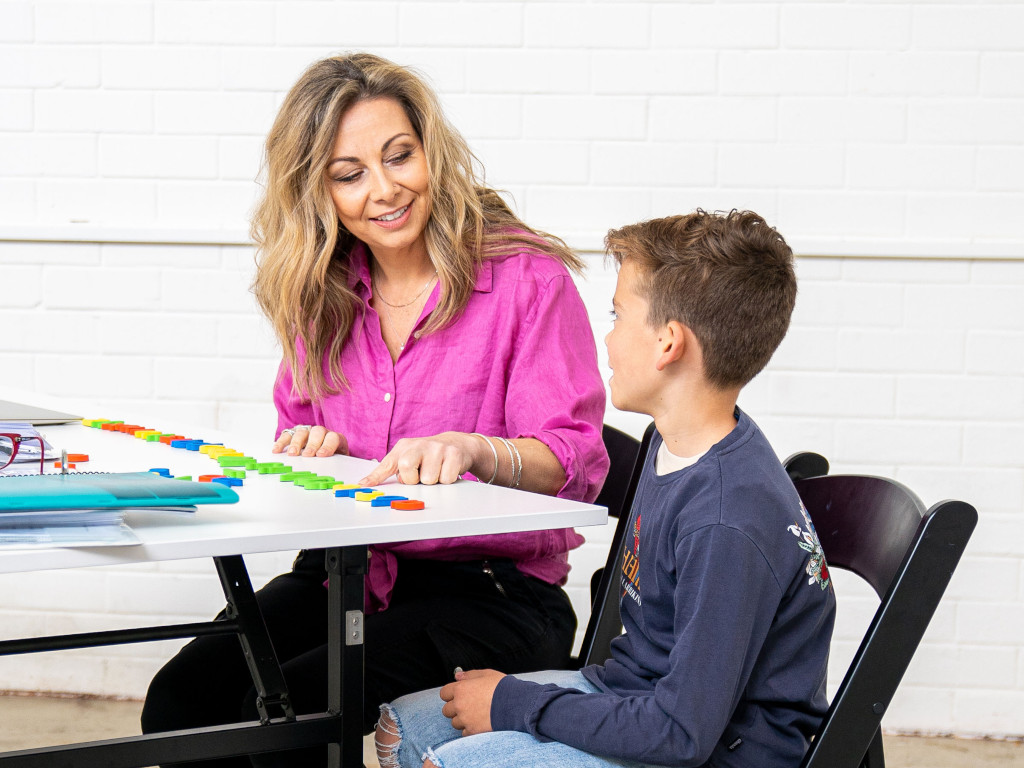
At Sensory Learning Services, Marisa’s approach is simple: teach the way they learn.
What is dyslexia?
At its core, dyslexia is a difficulty with phonological processing. The brain finds it hard to:
- hear the individual sounds (phonemes) that make up words
- link those sounds to letters and letter groups (phonics)
- recall those sound–letter links quickly enough to read fluently.
Signs to look for in your child
The signs of dyslexia vary for each child and change as a child grows. While many children occasionally reverse letters like b and d when they are young, persistent patterns in the following areas may indicate dyslexia.
Early years (Preschool – Year 1)
Before a child even begins formal reading, you might notice:
- Delayed Speech: Taking longer to start talking or using “baby talk” for longer than peers.
- Rhyming Struggles: Difficulty recognising or coming up with rhyming words (e.g., not realising “cat” and “hat” rhyme).
- Word Confusion: Mixing up sounds in long words (e.g., saying “hellicopter” instead of “helicopter” or “aminal” instead of “animal”).
- Difficulty Learning the Alphabet: Struggling to remember the names of letters or the sounds they make.
Primary school years (Year 2 – Year 6)
Once formal schooling begins, signs often become more apparent during literacy tasks:
- Slow, effortful reading: reading word by word, or often losing their place.
- Guessing words: using the first letter or a picture to guess instead of sounding out (reading house as home).
- Inconsistent spelling: spelling the same word several ways on one page, or spelling words as they sound (sed for said).
- Avoidance and frustration: reluctance to read aloud or do homework, which can show up as “tummy aches” or meltdowns before school.
Less obvious signs to look for
Dyslexia can also affect how information is processed more generally. You may notice:
- Difficulty following instructions with several steps (“Put your shoes on, grab your hat and meet me at the car”).
- Working memory difficulties: forgetting what they’ve just read, or struggling to hold a sentence in mind long enough to write it down.
- Left/right confusion: ongoing trouble telling left from right, or learning to tie shoelaces.
The “gift” of the dyslexic mind
While the school system can be a challenge, many children with dyslexia are “big picture” thinkers. They have amazing futures ahead of them and often show remarkable strengths in:
- creative problem-solving and “outside the box” thinking
- visual–spatial skills: building, puzzles and art
- empathy and social intelligence due to their need to adapt and observe
Parents usually know their child best. As Marisa says, “A parent’s gut feeling that something isn’t quite right with their child’s learning is almost always worth listening to. In my experience, it’s rarely wrong.”
If you recognise any of these signs, or simply have that feeling, early intervention is key. Marisa and the team at Sensory Learning Services specialise in using the Science of Reading and multi-sensory techniques to bridge these gaps and help the code of written language finally click.
Ready to help your child thrive and reach their potential?
Contact Marisa today to discuss your child’s needs and book an assessment.